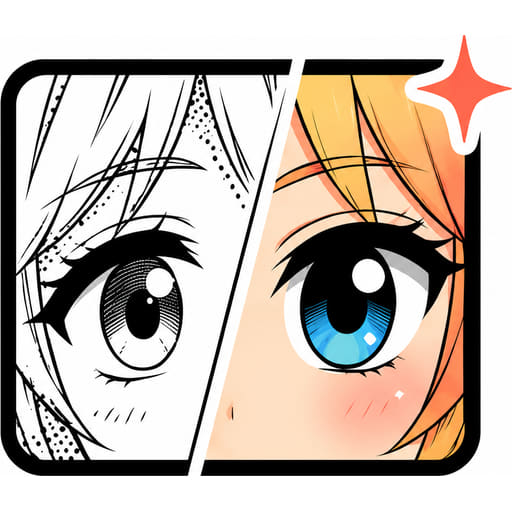

Screentones are not just gray areas waiting to be replaced with color. In manga they can describe material, lighting, depth, mood, skin shadow, clothing, atmosphere, or a deliberate graphic texture. An AI coloring pass has to decide whether a tone is structural information, shading, texture, or something that can be translated into color.
That interpretation is useful, but it can also change the original drawing. A good workflow therefore treats screentones as evidence to review rather than disposable grayscale noise. You can test a representative page with the AI Manga Colorizer before deciding how much tone texture to retain.
Why screentones are difficult for AI coloring
A screentone is made from repeated dots, lines, gradients, or patterns. Depending on image resolution and compression, the same tone can resemble texture, shadow, fabric, digital noise, or moiré. Dense patterns are especially ambiguous after resizing.
This means the system may preserve a tone, soften it, convert it into painted shading, or partially replace it with color. None of those outcomes is automatically correct. The intended role of the tone matters.
Keep intentional tones visible in the source
Start from the cleanest available page. Avoid preprocessing that removes all gray information simply to create a high-contrast black-and-white image. If a tone is intentional, preserving its boundaries gives the colorizer more information about the drawing.
If scan noise and screentones are mixed together, use conservative cleanup and compare the cleaned page against the original before coloring. The Manga Cleaner should be used to remove scan defects, not to erase artistic texture.
Tell the model that tones are part of the artwork
When screentone preservation matters, say so. A useful instruction can ask the colorizer to keep intentional screentone boundaries, hatching, black fills, and line art while adding color around them.
This does not force every dot to remain pixel-identical, but it gives the model a clearer priority than a generic request such as “fully color this manga page.”
Check tone boundaries before checking color taste
When reviewing a result, first ask whether the boundaries still describe the same forms. Look at:
- shadows across faces and clothing;
- gradients behind characters;
- patterned clothing or materials;
- speed-line regions and action effects;
- dark backgrounds and atmospheric tones;
- transitions between solid black, line art, and dotted tone.
A palette can be changed later. Lost structural information is harder to recover. The broader line-art preservation guide explains how to review these structural changes beyond screentones.
Watch for moiré and resized dot patterns
Fine screentones are sensitive to scaling. A source that has been resized several times can develop interference patterns that look like new texture. AI may then respond to the moiré rather than the intended tone.
Whenever possible, work from the largest clean source and avoid repeated lossy resaves. If you need a smaller final image, resize after you have reviewed the coloring result.
When converting tone into color can be acceptable
Not every project needs literal screentone retention. In a full-color adaptation, a gray tone may intentionally become a colored shadow, fabric shade, sky gradient, or lighting effect. The important question is whether the replacement preserves the same visual function.
For example, if a tone separates a character from the background, the colored version should maintain that separation. If it signals a shadow plane on a face, the new color should not flatten or move that shadow without a reason.
When screentones should remain visible
Keep more of the original tone language when the page depends on graphic manga texture, when the tone itself is part of the artist's style, or when you need a result that stays close to the source. In those cases, strong painterly rendering can make the page feel like a redraw instead of a color edition.
A practical review method
Keep three views available: the untouched source, the AI-colored result, and a grayscale view of the result. The grayscale comparison helps reveal whether color has hidden or replaced important tonal structure.
Review one representative page before processing a larger set. The AI manga coloring examples provide additional prompt-and-result cases you can inspect before choosing a direction. Pages with faces, dark clothing, speed effects, and detailed backgrounds are useful stress tests because they contain several types of tone information at once.
Does AI remove screentones when coloring manga?
It can. Some tones may be preserved, softened, or converted into painted shading depending on the source and instruction. That is why important tone boundaries should be checked directly against the original.
Should I delete screentones before AI coloring?
Usually not by default. Removing them can also remove information about shadow, material, and depth. If scan artifacts are the real problem, follow the scan-clean-color-review workflow instead of flattening every gray region. Delete or simplify tones only when that is an intentional production choice.
Can screentones and full color coexist?
Yes. A colored manga page can retain selected tone textures while using color for local materials and lighting. The balance depends on whether the goal is source preservation or a more fully rendered adaptation.


